
I’ve been holding back on reviews of some wearables for months as the Apps of many new wearable products keep crashing on low cost vanilla Android phones. “I can’t write a review of your product as your App is so bad….does the supplier know that the App is soooo bad on a “X” Android device? …..no response” I say to Marketing Agencies representing the wearable brand. “Can you get them to check this phone against your App?…no response”.
I’ve bought a high end Android device with the latest processor Snapdragon 835 and an incredible 8 Gbytes of RAM ( the same as my current 2010 Mac that I’m using) and guess what most of Apps run perfectly on this Rolls Royce Android phone.
App crashes kill wearable sales and growth
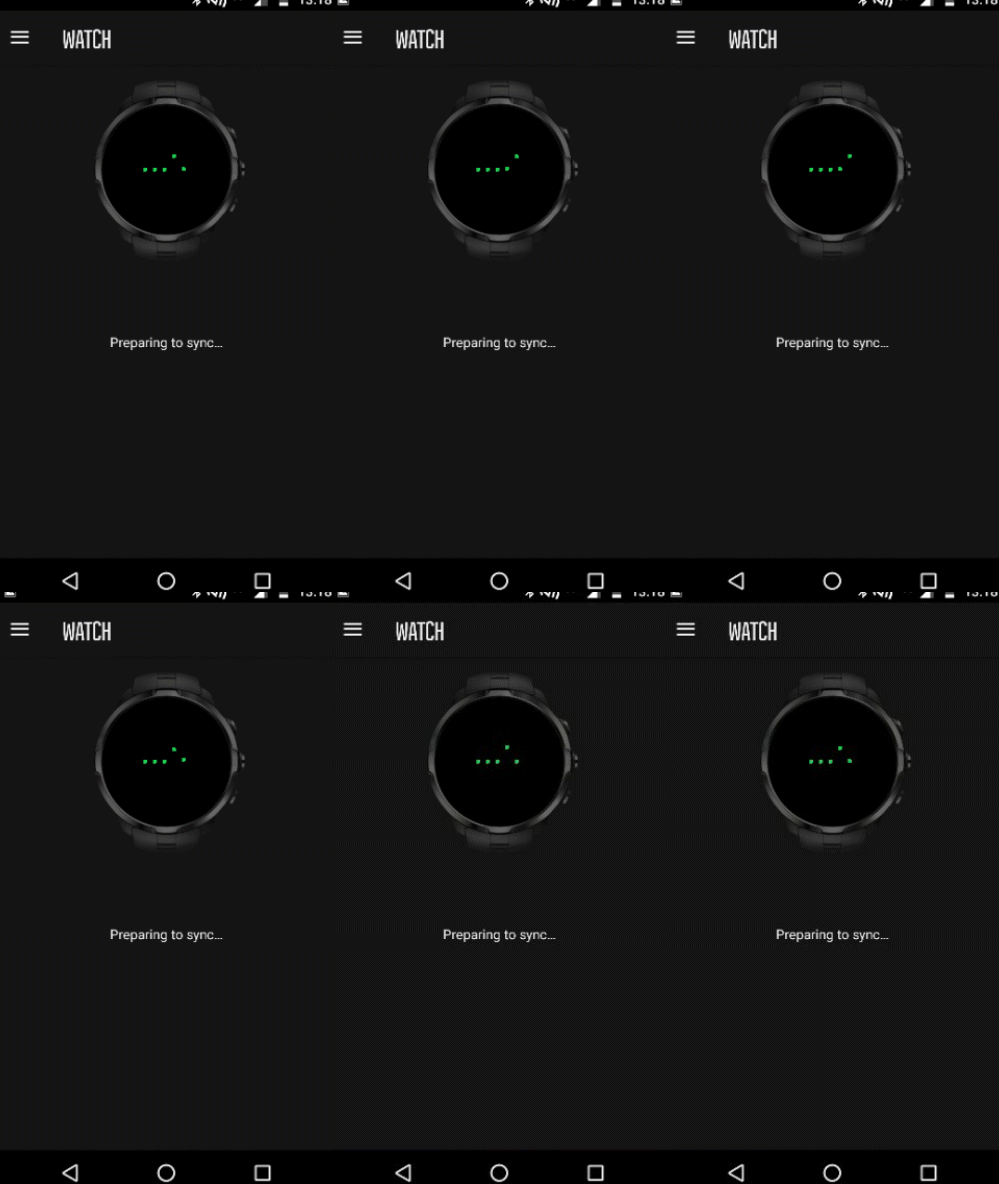
When Apps just don’t work this provides a negative experience on the wearable. All the hard money and investment into a start up with a new idea can die in an instant. Binary blogs trashing the product can be seen as unfair but who can blame the customer or reviewer for buying a medium or low end Android device?
Apple control their platform and App quality
Developers on iOS Apple’s platform can provide consistent experiences as Apple control the hardware and software. As Android is “open source” this means that hardware can be different and connections to chip sets and running a single App can produce different results (Crashes and stable running). This defines a “Fragmented Android” experience and different experiences bad and good on different Android devices with Apps.
More devices need to be in developers test portfolio
Developers still have to get better at testing their Apps though across multiple Android builds from £80 vanilla Android to £699 customised OS’s such as Oneplus’s Oxygen OS. They should also test with a N-2 philosophy in supporting OSs (N being the latest version and -2 being backwards compatible to the two oldest OSs) .This should avoid the risk of the wearable becoming DOA (Dead On Arrival) when the customer gets it.
Wearable channel partners need to give their clients the negative feedback
Marketing agencies need to step up too. They need to get the manufacturers to take the feedback and get quick replies to reviewers queries. We are not here to trash products , we are here to show the value the product offers customers.
App crashes can lead to high product returns
So what if I’ve paid circa £250 for a device and the App crashes instead of me just borrowing it for evaluation? It should go straight back to the device manufacturers that’s what. There are some tips here that may help your low end Android device run across suspect App if the Android device is to blame. The best I’ve found for instant crashes fix is Clear data see this great blog.
Android OS needs to be hardened
Android also had the responsibility to toughen it’s OS to ensure that App builds can be toughened to avoid crashes. A similar example of hardening is when the Apple Safari browser instead of crashing on large web pages devices “reloads” the web page. Imagine if Android reloaded the App automatically everytime you see or feel it isn’t responding or syncing?
Customers decide Wearable’s fate
So next time you before you decide to purchase a wearable just Google ” WEARABLE NAME App crashes on Android?” before pressing the buy button. If in doubt email the device manufacturer and tell them what phone you have and ask them does their product work with it? If you don’t get a reply don’t buy it.
 whichwearable.co.uk
Many thanks for the suggestions, I will try to take advantage of it.
LikeLike
Thanks for your comment .It shouldn’t be the burden of the customer to make the product work, if in doubt return a wearable to the supplier complete with your mobile phone type and demand your money back.
LikeLike